 I am very excited to be able to share another 5 QUESTIONS WITH you all today. The loveliest thing about our community is being able to meet others who totally get it - all of it - and I have had the pleasure of meeting my next guest to the blog who runs the very inspirational Instagram account, TSW Emma (here). Even more exciting, back in late 2017, I took part in a documentary Emma is currently working on titled, The Prescribed Addiction, which will be another much-needed documentary on our condition that I've also blogged about (here). When we first met in 2017, Emma was still going through TSW but today, she is out the other side and living life to the fullest. Her skin is absolutely beautiful and I just had to interview her on my blog. I also wanted to find out more about the route she took to get better which absolutely fascinates me. Taking immunosuppressants through TSW is a very controversial subject within our community and whilst I would not use them myself, I am always interested to hear about anything that could potentially help someone through withdrawal. I think I will leave it to Emma to explain the rest:
My name is Emma and I’m 28. My eczema started as a baby with a dairy allergy and as a child I remember little red patches on my inner elbows. Whenever the patches got out of hand, I would apply a bit of topical steroid cream to calm the eczema down. It was frustrating but never too severe.
 |
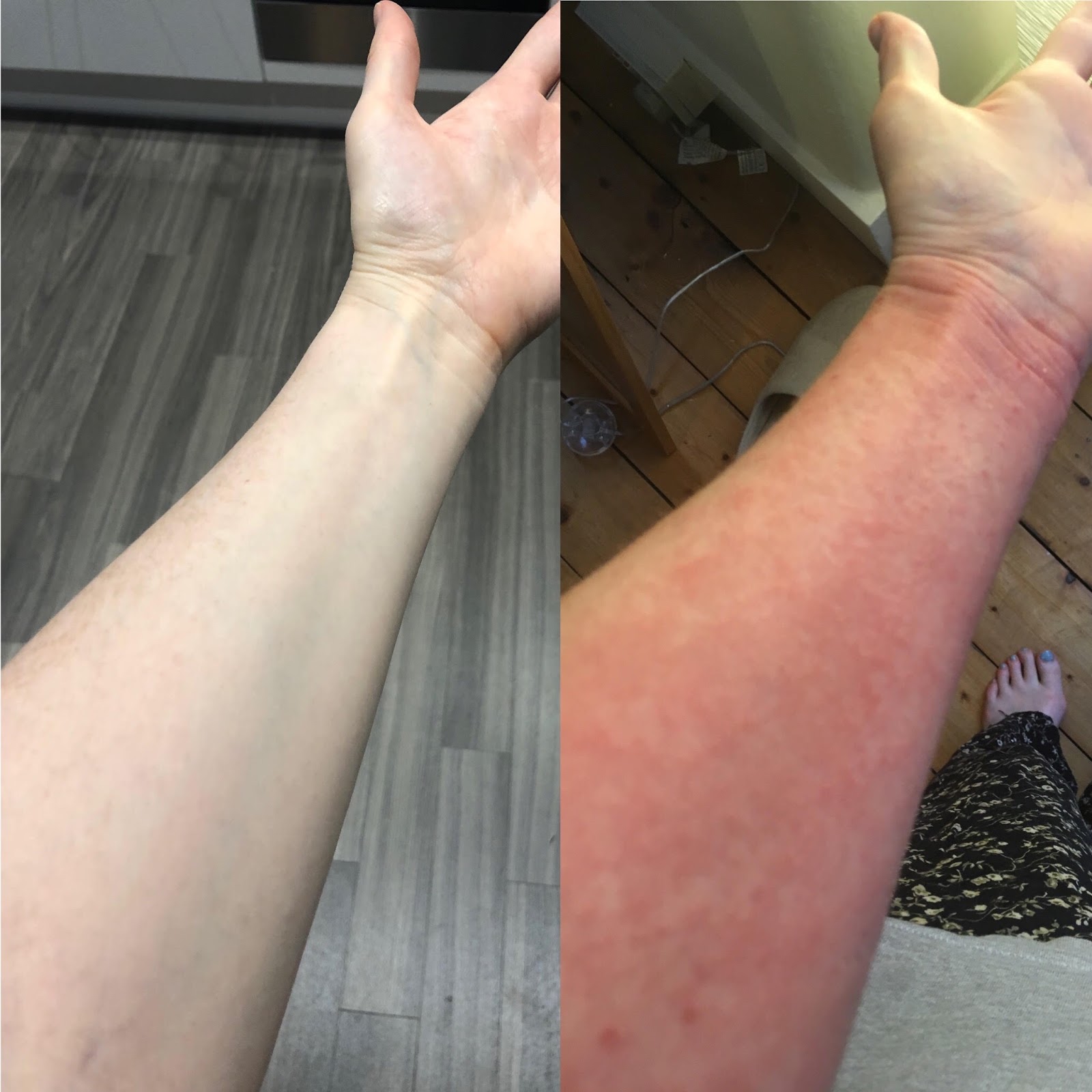
| Emma's skin during withdrawal. |
For about two months after coming off cyclosporine I used topical steroids again. I soon began to notice large flashes of red on my arms and this was when I found out about TSW.
I didn’t go the ‘all natural’ route for TSW. I was adamant that the creams were the problem, but I still felt an obligation to comply with the doctor’s suggestions and tried to find a compromise, one that would also mean I was able to continue working throughout the process.
I went on to methotrexate in September 2017. I still don’t know if it worked or not; it can take up to 12 weeks to kick in, but I didn’t have clear skin for about a year. Maybe it made my TSW less severe, but I’ll never really know.
I tapered off the methotrexate over the course of 18 months. I have now been off it for nearly 6 months and it has been two years since I used topical steroids. I still have slightly sensitive skin, but I don’t have a single patch of eczema left. The freedom is incredible!
2) How did you find out about TSW?
After coming off cyclosporine and returning to regular use of topical steroids, I noticed my eczema spreading. I was getting these hot flashes of red on my forearms – like I was sunburnt – and my face was flaking, I had these tiny blisters on my skin and my eyes were always sore when I woke up. These were new symptoms that looked so different from the traditional eczema I had been used to, and my steroid creams weren’t calming the areas that they had in the past.
 |
| Emma's skin now! |
So I took the prescription, but it didn’t feel right. Since I was a child I had it ingrained into me that topical steroids were for 2 weeks usage only and certainly not for the face.
When I got home, I took to Google and asked ‘why does my eczema look like sunburn?’ I instantly found ITSAN and blogs about TSW.
I’m a bit of a sceptic, so I don’t know why I believed what I read online when it was contrary to the advice of my dermatologist, but it just seemed to make so much sense to me, and I ticked all the boxes for the symptoms listed. So without giving it too much thought (please DO think it through!) I decided to give up the creams that same week.
3) Did you find that anything aided your healing?
For comfort, I took Dead Sea salt baths every night. They made life more bearable and enabled me to go to work the next day, because they softened my skin (which at times was really hard to move) and kept all the wounds clean. After the bath I used Epaderm moisturiser, which was the only one that wouldn’t aggravate my skin.
 |
| Incredible transformation! |
I had a LOT of laundry during TSW, because you can’t wear something for long without feeling like your skin is all over it. I switched to a laundry liquid that wasn't as harsh as the mainstream supermarket brands.
I had an ice pack for my eyes in the morning, which helped me to open them when they were locked shut. Towards the end I also got acrylic nails, which really helped break the itch-scratch cycle for me, because I wasn’t able to do so much damage. I think this really accelerated my healing.
Medically, there were also a few things going on. I was on methotrexate and as I said, I am not sure whether that made my symptoms less severe. Other than that, Nizoral, which is an anti-fungal shampoo, really helped with my scalp.

I also saw a naturopath, which was an interesting experience, but in retrospect offered me help as a sort of talking therapy rather than anything more physical.
Lastly, I never truly let myself believe that TSW would take as long as it did for other people. While that might sound naïve, I think it helped me to remain positive and cling to as normal a life as possible.
4) Sum up TSW in five words.
Debilitating, unpredictable, isolating, grounding, freeing.
TSW is pretty awful when you’re going through it, but it’s so amazing because there is light at the end of the tunnel. Most people who suffer with chronic illness don’t have that chance of complete recovery. So we’re lucky in that sense.
 I would say I am more empathetic now too. We genuinely don’t know what people are going through or why they are suffering – and it is not their fault if they are. I think I now have a better understanding of that.
My life is better now than before I went through TSW. I take better care of my body and I notice more when I don’t. I guess it taught me to really listen to what my body needs to function well, whether that be nutrition, the products I use or the environments I find myself in.
Most importantly, TSW brought me closer to the right people. The people who stick by you when your condition is largely unrecognised by the medical community, when your face is falling off, when you can’t look at yourself in the mirror – never mind look someone in the eye, when you’re passing on at least 50% of social events… Those people are the best.
And the TSW online community is such a source of inspiration and courage, so it has been incredible to meet some of them in person as well as via social media.
To follow Emma's fabulous Instagram account, click here.
Thank you so much Emma <3
Links to my previous 5 QUESTIONS WITH:
Henni @rawsomesoul (here)
Alice @healthy_healer (here)
Maleeha @TSWHealed (here)
Nina Sloan (here)
Nick @Eczemacism (here)
Stephanie & Isaiah Quinn (here)
Stephanie @TheItchyConundrum (here)
Josh @Redskinrecoverydiary (here)
Briana @PREVENTABLE (here)
Melanie Lynch (here)
Stephanie Miller (here)
Holly Dillon @GetYourSkinOut (here)
Me (here)
Keisha Gregson (here)
Douglas Maddy & Charlie (here)
Gillian Breslin (here)
Jasmine and Jennifer (here)
Robyn (here)
Brittany Hallberg (here)

